Decathlon is one of the world's largest sporting goods retailers. It is specially known for its vertically integrated business model, affordable pricing strategy and innovation driven product development.
It was founded in 1976 in Lille, France by Michel Leclercq. The brand has changed global sports retail by controlling everything from research and design to manufacturing and distribution all under one roof.
Today, Decathlon operates in more than 70 countries with over 1700 stores worldwide and a growing ecommerce presence that continues to expand every year.
Company Overview
| Detail | Information |
|---|---|
| Founded | 1976, Lille, France |
| Founder | Michel Leclercq |
| Headquarters | Villeneuve-d'Ascq, France |
| Countries Present | 70+ |
| Employees | 100,000+ |
| Private Label Brands | 20+ in-house sports brands |
| India Entry | 2009 |
Business Model Analysis
Vertical Integration Strategy
Decathlon owns and controls its product development, manufacturing, logistics and retail outlets all inhouse. Unlike Nike or Adidas which outsource design and manufacturing to third parties, Decathlon does most of this itself. The result is a leaner, faster and more cost efficient operation.
This strategy delivers four clear benefits:
- Lower production costs with no middlemen
- Competitive pricing for a wider audience
- High margin control at every stage
- Faster product innovation cycles.
Instead of spending on celebrity endorsements, Decathlon invests in private label brands and product quality, keeping marketing costs low and product standards high.
Innovation And R&D
Decathlon runs specialized R&D centers for each sport category: cycling, running, swimming, trekking, football and fitness. Each center has its own team of engineers, designers and athletes developing better products together. This delivers technical fabric improvements, weather adaptive gear and cost efficient products. Decathlon files hundreds of patents every year, proving that innovation is a genuine business priority.
Pricing Strategy
Decathlon follows a best value for money model across three tiers:
- Affordable beginner products
- Mid-range performance gear
- A limited professional range.
This allows Decathlon to serve everyone, from a school student buying their first football to a competitive cyclist upgrading equipment. It also enables deep market penetration in price sensitive but fast growing markets like India.
Digital Transformation And E-Commerce Growth
Omnichannel Strategy
Decathlon has built a true omnichannel retail experience by integrating four channels seamlessly. Physical retail stores remain the primary touchpoint designed as large experiential spaces where customers can touch, test and try products. The online website offers the full product catalog with detailed specifications and user reviews. The mobile app provides a convenient shopping experience with features like barcode scanning in store and order tracking. Click and collect services allow customers to order online and pick up in store, reducing delivery time and shipping costs.
During the COVID 19 pandemic, Decathlon's ecommerce sales increased significantly across all major markets. In India specifically, online sales grew sharply as gyms and outdoor spaces closed and consumers shifted to home fitness. This period was speeding up Decathlon's digital infrastructure investment considerably.
| Year | Online Contribution To Sales |
|---|---|
| 2018 | 8% |
| 2019 | 12% |
| 2020 | 20% |
| 2021 | 17% |
Financial Performance And Growth Trends
Global Revenue Growth
| Year | Revenue (Approx.) | Growth Rate |
|---|---|---|
| 2018 | €11.3 Billion | - |
| 2019 | €12.4 Billion | 9% |
| 2020 | €11.4 Billion | 8% (Pandemic impact) |
|
| €13.8 Billion | 21% rebound |
| 2022 | €15.4 Billion | 12% |
Decathlon's revenue recovery after COVID 19 was faster than most global retailers, largely because of its strong digital infrastructure and the global increase in home fitness and outdoor activity demand during and after the pandemic.
Decathlon India Performance
India has become one of Decathlon's fastest growing markets globally. Since entering India in 2009, the brand has expanded consistently, now covering metro cities, Tier 2 cities and increasingly Tier 3 towns.
| Year | Estimated Revenue (India) |
|---|---|
| 2018 | ₹1,100 Cr |
| 2019 | ₹1,897 Cr |
| 2020 | ₹1,775 Cr |
| 2021 | ₹2,500+ Cr |
| 2022 | ₹3,955 Cr |
India contributes significantly to Decathlon's global growth story for four reasons like a rapidly growing fitness culture, especially post pandemic consistent Tier 2 and Tier 3 city expansion, highly competitive, affordable pricing that matches Indian consumer expectations and a large young population increasingly interested in sports and outdoor activity.
Season-Wise Sales Performance Analysis
Sports retail is highly seasonal. Decathlon plans its inventory, marketing and staffing around seasonal demand patterns throughout the year.
Q1 - January to March is driven by New Year fitness resolutions. Running gear, gym equipment, yoga mats and home workout products see the highest demand during this period as consumers commit to health goals at the start of the year
Q2 - April to June is the summer sports season. Swimming equipment, outdoor trekking gear, summer apparel and hydration products perform strongly. In India, this quarter also sees demand from school sports programs wrapping up the academic year.
Q3 - July to September covers the monsoon season in India, which shifts demand toward sports like football, basketball, indoor fitness and school sports equipment which are the primary sellers. This is typically a moderate revenue quarter compared to Q1 and Q4.
Q4 - October to December is the peak season, especially in India. The festive periods drive gifting purchases and lifestyle upgrades. Winter sports apparel, cycling products and fitness gear see maximum sales volumes. For Decathlon India, October through January is consistently the strongest sales window of the year.
Competitive Advantage
Private Label Ecosystem
Decathlon has built 20+ in house brands, each dedicated to a specific sport. Quechua serves the trekking and outdoor market, Kalenji covers running, B'Twin covers cycling and Domyos handles fitness and gym. Each brand is positioned as an affordable specialist, offering sport specific quality that competes with premium brands at a fraction of the price.
Store Experience
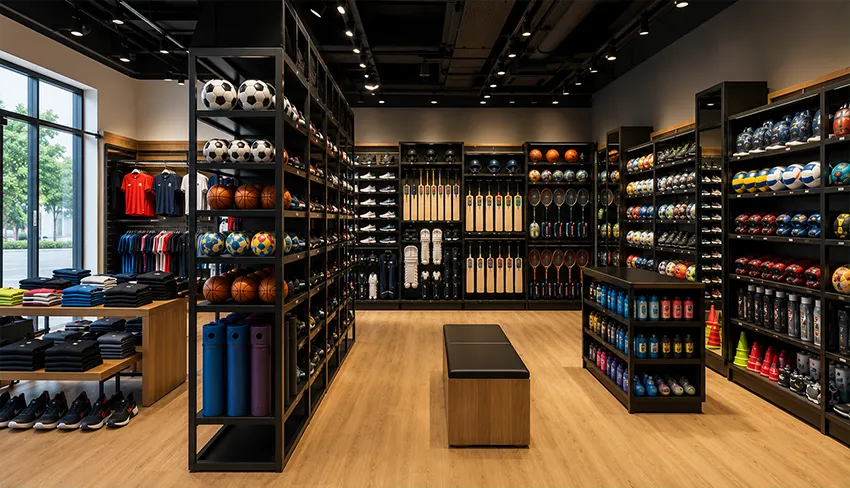
Decathlon stores are large, warehouse style experiential spaces where customers can test products before buying. Some stores have indoor cycling tracks, running areas, climbing walls and football turf. This hands-on shopping experience creates trust and reduces returns.
Cost Leadership
By eliminating middlemen across design, manufacturing and distribution, Decathlon reduces costs by an estimated 20–30% compared to global competitors selling equivalent products. This saving is passed directly to the consumer.
Sustainable Manufacturing:
Decathlon has made public commitments toward eco design and carbon footprint reduction. This includes using recycled materials in product lines, reducing plastic packaging and setting sustainability targets across its supply chain, an increasingly important factor for younger consumers.
SWOT Analysis
Strengths
- Strong end to end supply chain control reduces costs and improves speed
- Affordable pricing makes sports accessible to a much wider audience
- Innovation driven culture with hundreds of patents filed annually
- Experiential store design builds customer trust and loyalty
Weaknesses
- Limited premium positioning means Decathlon is rarely seen as an aspirational brand
- Less celebrity and influencer driven marketing reduces brand buzz in urban markets
- A private label strategy means limited visibility in categories dominated by Nike, Adidas or Puma fans
Opportunities
- Sports education partnerships with schools and universities in India
- e-Commerce and quick commerce penetration in Tier 3 cities
- Subscription based fitness models and digital coaching services
- The women's sports segment, which is growing rapidly in India
Threats
- Rising competition from Amazon, Flipkart and sport specific D2C brands
- Supply chain disruptions from global events can affect product availability
- Currency fluctuations impact profitability in emerging markets
Lessons for Sports Management Students
Vertical integration improves cost leadership.
Owning your supply chain from design to retail is the most sustainable way to maintain pricing power in a competitive market.
Product innovation beats heavy advertising.
Decathlon spends far less on celebrity marketing than Nike or Adidas yet competes effectively through product quality and affordability. Innovation is its marketing.
Omnichannel retail is the future.
Physical stores, ecommerce, mobile apps and click and collect services must work together seamlessly. Customers expect to move between channels without friction.
Data-driven seasonal inventory planning increases margins.
Understanding when customers buy specific products and stocking accordingly reduces waste, improves availability and protects profitability across the year.
Conclusion
Decathlon has redefined sports retail by combining affordability, innovation and supply chain efficiency into a single, highly effective business model. Its global growth story and especially its India growth story reflect how structured expansion, localized pricing and digital transformation can create long term sustainability in emerging markets.
For sports management professionals and students, Decathlon serves as a benchmark case study in retail strategy, financial discipline and operational excellence. It proves that you do not need celebrity endorsements or premium pricing to build a globally dominant sports brand. You need the right product, the right price and the right experience, delivered consistently at scale.