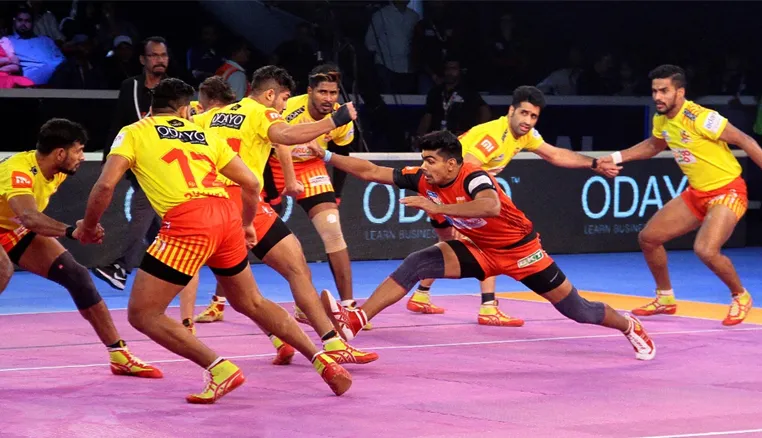
The Pro Kabaddi League (PKL) has emerged as India's second most commercially successful sports league after the Indian Premier League (IPL). Since its launch in 2014 by Mashal Sports, in partnership with Star Sports and later Disney and Hotstar for digital streaming, PKL has completely changed how Kabaddi is viewed, played and making money in India.
This Pro Kabaddi League case study covers the Pro Kabaddi League business model, PKL revenue growth, season wise financial statistics, PKL sponsorship revenue and sports management insights. Learn how PKL changed Kabaddi into a multimillion dollar sports league and what sports league commercialization in India truly looks like.
Overview Of Pro Kabaddi League
Before PKL, Kabaddi was largely a rural sport with no structured commercial framework. PKL changed that by borrowing the franchise sports model from cricket and applying it to a native Indian sport. The result was a league that captured national attention within its very first season.
When PKL launched in 2014 with 8 city based franchises, it introduced five core pillars that would define its commercial success:
- **City-based franchise ownership:** Giving teams regional identity and loyal fan bases
- **Player auctions:** Creating transparency, competitive team-building and media buzz
- **Centralized media rights:** Pooling broadcast revenue for fair distribution across all franchises
- **Data driven broadcasting:** Bringing professional production quality to Kabaddi for the first time
- **Structured sponsorship ecosystem:** Attracting national and regional brands at scale
The league's prime time telecast strategy on Star Sports was a game changer. By airing matches during evening hours, PKL reached millions of households across Tier 2 and Tier 3 cities. Audiences deeply connected to Kabaddi as a cultural sport but who had never had a professional league to follow.
Season-Wise Growth & Financial Performance
| Season | Year | Estimated Central Revenue (₹ Crore) | Key Highlights |
|---|---|---|---|
| Season 1 | 2014 | ~60–70 | Breakthrough TRP success |
| Season 2 | 2015 | ~90 | Increased sponsorship |
| Season 3 | 2016 | ~120 | Expansion momentum |
| Season 4 | 2016 | ~140 | Teams expanded to 12 |
| Season 5 | 2017 | ~200+ | Longer season format |
| Season 6 | 2018 | ~250 | Strong rural + urban viewership |
| Season 7 | 2019 | ~300 | Peak commercial expansion |
| Season 8 | 2021 | ~200 | Pandemic impact |
| Season 9 | 2022 | ~350 | Revenue rebound |
| Season 10 | 2023 | ~400+ | Strong digital monetization |
Broadcast & Media Rights Growth
PKL's media rights strategy is the fundamental pillar of its financial model. The league secured multi year broadcast deals with Star Sports from its very first season, giving it financial predictability and production quality that most emerging sports leagues lack.
PKL's media rights have reportedly crossed ₹900 crore over multi year cycles, a high figure for a non cricket sport in India.
As more Indian viewers consumed content on smartphones, Disney+ Hotstar became a key platform for PKL bringing younger and urban audiences who may not have watched it on television.
Key Revenue Drivers
- Multi-Year Broadcast Agreements: Long term deals with Star Sports provide revenue certainty. Broadcasters pay for rights, reducing financial risk for the league organizers.
- Title Sponsorship Deals: PKL has attracted major title sponsors, including Vivo (2016–2022) and Dream11. Title sponsors pay a premium for maximum brand visibility across the season.
- Team Sponsorships: Individual franchises attract their own sponsors, jersey placements, on ground branding and digital partnerships, adding to local revenue.
- Digital Ad Inventory: With streaming on Disney+ Hotstar, PKL earns from digital advertising, which is growing faster than traditional TV ad revenue in India.
- Ticketing: Live match attendance varies by city. Metros like Mumbai, Pune and Bengaluru generate strong gate receipts.
- Merchandising: Franchise merchandise is a growing revenue stream with major expansion potential.
Viewership & Audience Statistics
PKL consistently ranks among India's most watched non cricket sporting properties.
| Metric | Details |
|---|---|
| Season 1 Viewership | 400+ million cumulative reach |
| Peak Season Viewership | 500+ million (multiple seasons) |
| Geographic Reach | Strong Tier 2 & Tier 3 city penetration |
| Language Coverage | 10+ regional languages broadcast |
| Digital Growth | Significant post-2020 growth on OTT/streaming |
| Demographic | 18–45 age group; strong male viewership; growing female audience |
Unlike cricket or football, Kabaddi has cultural roots in states like Maharashtra, Haryana, Punjab and Tamil Nadu. PKL successfully turned this organic affinity into structured fan engagement.
Business Model Breakdown
1. Centralized Revenue Sharing
PKL follows a centralized revenue sharing model similar to successful franchise leagues worldwide. The league pools its two biggest revenue sources, broadcast rights and central sponsorships and distributes a portion equally among all franchises. This makes sure even smaller city franchises remain financially stable and do not depend wholly on local revenue.
This structure protects the league's competitive balance. A franchise in a smaller city has the same access to central revenue as one in a major metro, keeping team quality consistent and viewer interest high.
2. Franchise Economics
Each PKL franchise earns revenue through a combination of central distributions and local revenue generation.
- Share of centrally pooled broadcast and sponsorship revenue
- Local sponsorship deals like jersey branding, training kit partners, digital sponsors
- Ticketing revenue from home matches
- Merchandise sales, online and at venues
Franchise valuations have grown significantly since 2014. Industry analysts estimate that early franchise buyers have seen notable appreciation in asset value making PKL franchises attractive long term investments.
3. Sponsorship Ecosystem
PKL attracts brands across sectors. Because the league reaches deep into Tier 2 and Tier 3 India, regions that many premium brands find difficult to penetrate through other media, it is highly attractive to mass market companies.
- FMCG brands targeting value conscious buyers in smaller cities
- Brands reaching first time digital finance users
- Dream11 and similar platforms targeting sports engaged audiences
- Two wheeler and entry level car brands targeting Tier 2 buyers
- Platforms targeting students and young professionals in non metro cities
SWOT Analysis
Strengths
- Indigenous sport with deep cultural appeal across India
- Low infrastructure investment compared to cricket or football
- Prime time friendly format, each match runs approximately 40 minutes
- Strong regional identity and fan loyalty
- Backed by a powerful media partner in the Star Network
Weaknesses
- Limited international expansion beyond South Asia
- Heavy financial dependence on broadcast revenue
- Merchandise and live event revenue are still underdeveloped
- Low international player participation reduces global appeal
Opportunities
- Women's Pro Kabaddi League launch could double audience and brand reach
- International expansion into South Asia and the Middle East
- OTT and digital monetization through subscription models
- Sports science integration to improve athlete performance and longevity
Threats
- Competitive sports calendar, IPL, ISL, and emerging leagues compete for viewer attention and sponsor budgets
- Sponsor dependency, over-reliance on a few large sponsors, creates financial risk
- Market saturation risk if too many domestic sports leagues dilute viewer attention
Strategic Lessons For Sports Management
The PKL demonstrates powerful lessons for sports managers, league operators and investors
- Media-First Strategy Drives Growth: PKL's decision to anchor its launch around a prime time broadcast deal was its single most important strategic move. Without Star Sports, PKL would not have achieved national reach in Season 1. Any new league must secure media distribution before anything else.
- Indigenous Sports Can Achieve Premium Branding: Before PKL, Kabaddi was not considered a premium brand environment. PKL proved that with the right packaging, production quality and marketing, even grassroots sports can attract top tier national sponsors.
- Structured Governance Builds Investor Confidence: The centralized revenue model, transparent player auctions and clear franchise rules gave investors confidence that PKL was a long term and stable business.
- Athlete Auctions Create Media Moments: Player auctions are not just about team building. They generate enormous media coverage, fan debate and social media trends, all free marketing for the league.
- Regional Identity Creates Loyal Fan Bases: By naming teams after cities like Patna Pirates, Jaipur Pink Panthers, Bengal Warriors, PKL gave fans a personal reason to watch. Regional pride is one of the most powerful engagement tools in Indian sports.
Future Outlook
PKL is well positioned for continued growth. Several strategic opportunities are likely to shape its next phase.
- International Broadcasting Expansion: As the Indian diaspora grows globally, PKL could license broadcast rights to markets in the Middle East, Southeast Asia, Europe and North America.
- Women's League Launch: A Women's Pro Kabaddi League would expand the total audience, attract women focused sponsors and create new professional pathways for female athletes.
- Data-Driven Fan Engagement: Digital platforms allow leagues to offer fantasy sports, real time Kabaddi league statistics, interactive content and personalized experiences that drive engagement and create new monetization layers.
- Enhanced Sports Science Integration: Franchises that invest in injury prevention, nutrition and recovery protocols will have a competitive edge and help extend athlete careers.
Conclusion
The PKL stands as a benchmark in Indian sports commercialization. In just over a decade, it took a sport played in mud fields and turned it into a multi hundred crore professional ecosystem watched by hundreds of millions of fans.
The PKL business model works because it is built on solid commercial foundations, a media first launch strategy, a fair centralized revenue model, transparent player auctions, strong franchise governance and a deep understanding of its audience.
For sports management students, PKL financial analysis reveals how media partnerships can derisk a new league. For investors, it shows how the franchise sports model India can deliver long term asset appreciation. For league operators worldwide, it demonstrates that indigenous, culturally significant sports do not need to copy cricket or football, they need to find their own identity and commercial language.
The Pro Kabaddi League is not just a Kabaddi story. It is a blueprint for the future of the sports business in India.